
Our MissionOur Mission
- Reducing GHG in the household
- Developing a unique GHG credit chain
- Realizing carbon neutrality in livestock

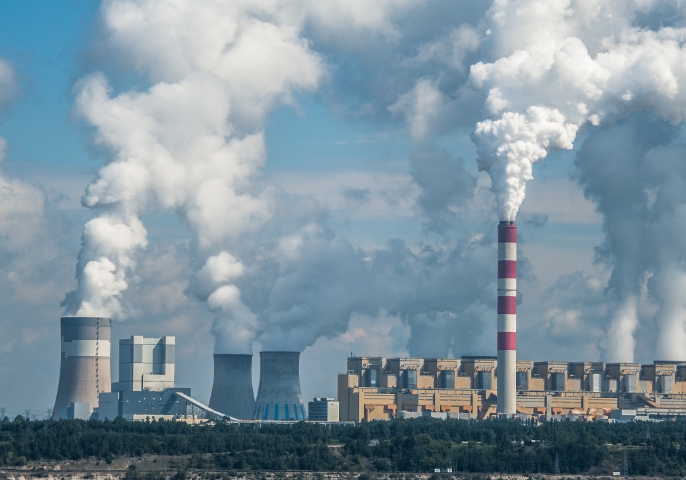
Current issues in methane reduction.
Currently, CO2 emission reductions through credit trading have seen rapid advancements with Emissions trading markets established in the EU, USA, and China.
On one hand, methane does not have sufficient credit trading in place despite holding 16% of GHGs, with 25 times the greenhouse effects (80 times over 30 years).
This is due to the insufficient supply of credit, caused by the lack of recognition that methane can be converted into credit.
On the other hand, methane reduction has enormous potential, with up to 830 billion yen in the worldwide market, and already has many means for reduction.
*With this greenhouse effect coecient, it is also possible to predict a 25-fold increase in the market size.


Direction for solutions
The effective solution would be to aim for methane reduction through
supporting the issuance of methane credits, and increasing supply.
Due to several reasons such as:
-
Lack of timeliness:
Existing J-credits take about two years from application to issuance of emission credits. -
Difficulty for popularization:
The conditions from application to cash-out are difficult to meet for smaller businesses. -
Limited accessibility:
Trading halts without the platform. -
Lack of reliability:
The weak traceability prevents trust.
There is an urgent need for a block-chain based form of voluntary carbon credit.
We are focusing on developing our own GHG credit chain.
We are committed to promoting methane-credits for the reduction of methane emissions
with the goal of achieving carbon neutrality.
Furthermore, by replacing existing J-credits
with a form of voluntary credit with an expeditious review process,
we are focusing on shortening the lengthy 2-year review period
to facilitate distribution.
Services
We advocate these methods for evaluating methane emission
reductions and crediting emission reductions for the following reasons:
- 1Allows to obtain equivalent credit faster than J-credit by preparing a highly accurate screening process.
- 2Issuance on the blockchain allows for high security, resisting double transfers and forgeries.
- 3Since the tokens will be on the blockchain, address administrators can freely move tokens.
- 4Gains high traceability with blockchain technology.
- 5Achieve transparency by decentralizing operations, resisting collusion and corruption.